CINaM - Centre Interdisciplinaire de Nanoscience de Marseille

Partenaires

CINaM
CNRS
Logo tutelle


Rechercher

Sur le Web du CNRS


  • CINaM
  • Campus de Luminy
  • Case 913
  • 13288 Marseille Cedex 9
  •  
  • Tel : +33(0)4 91 17 28 00
  • Fax : +33(0)4 91 41 89 16

À la une

Vignette une

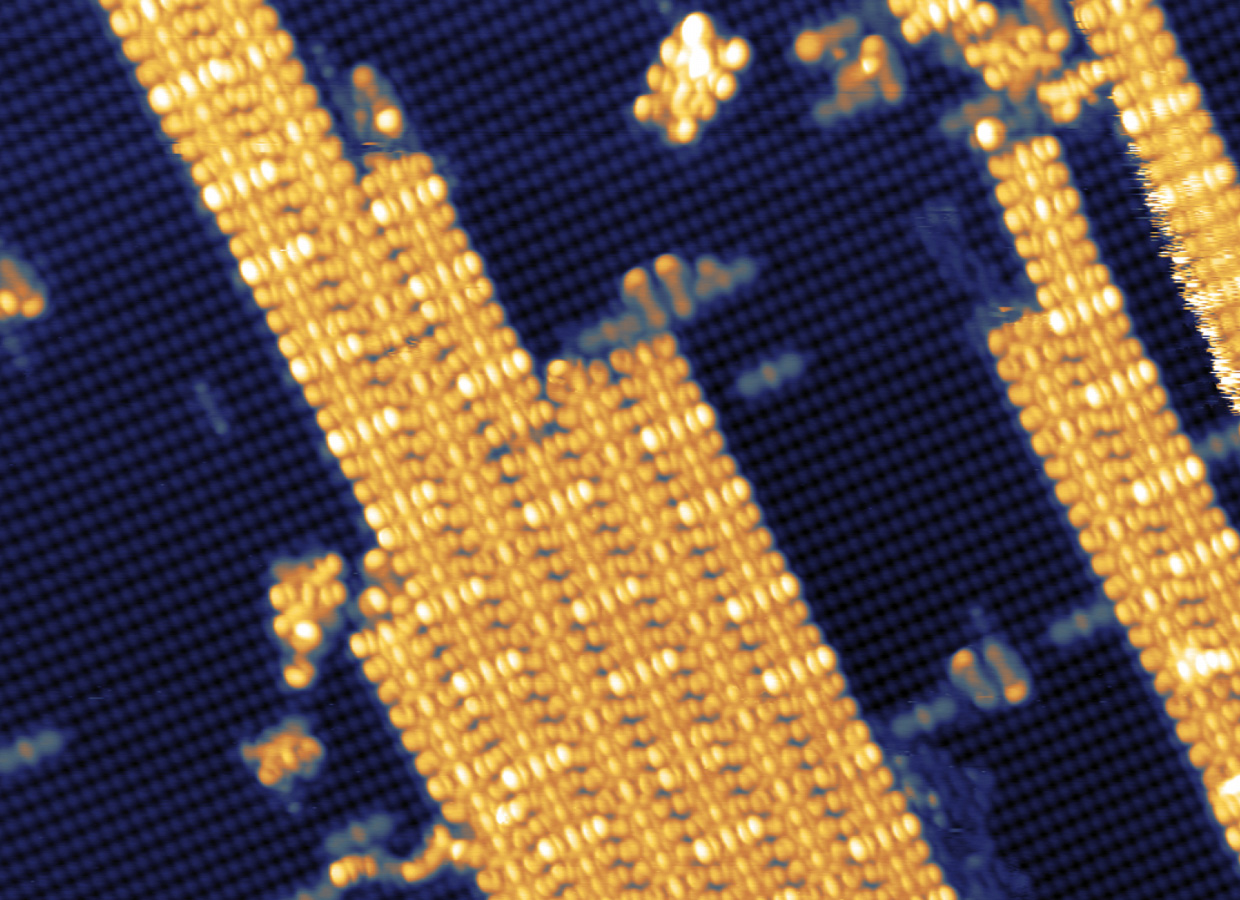
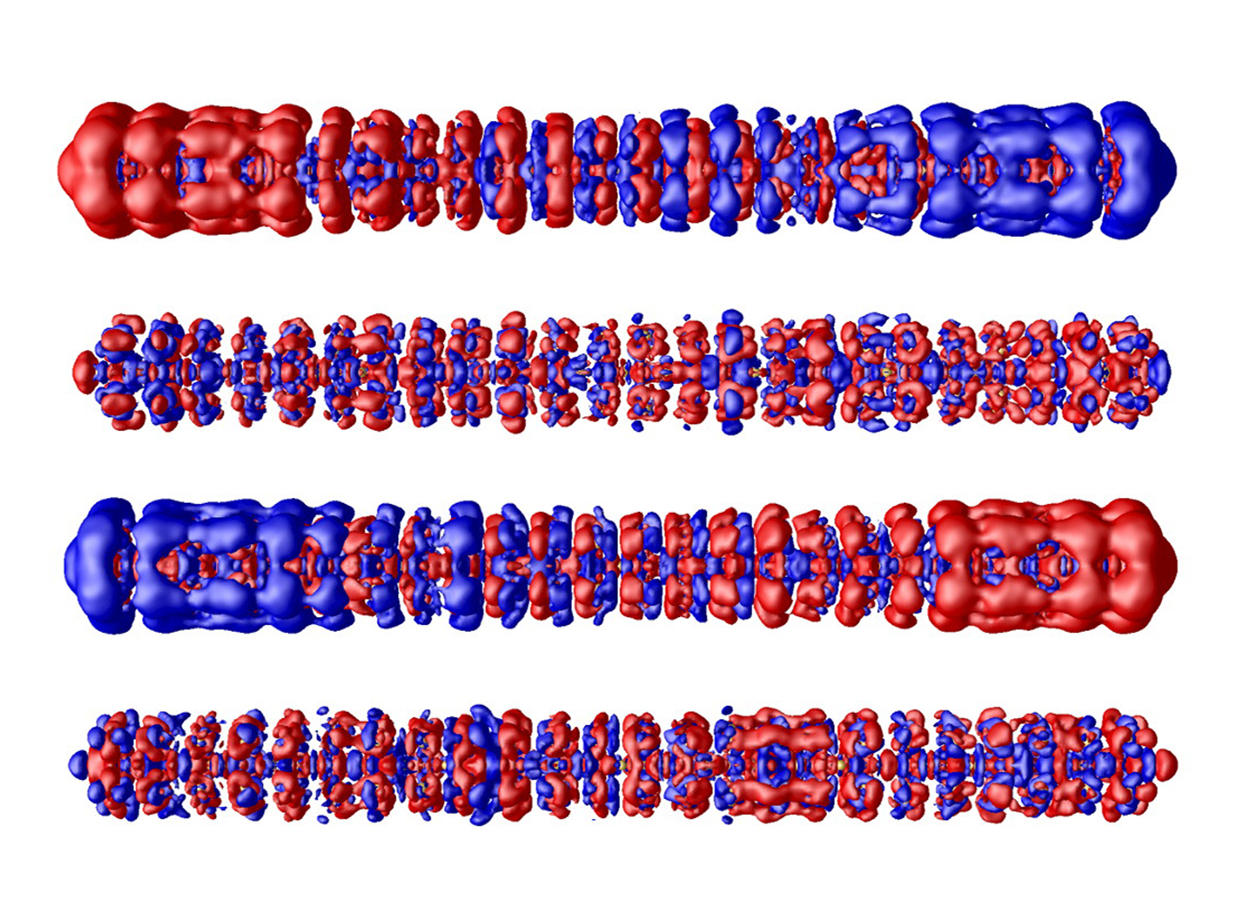
Comment un agrégat de palladium passe d’un comportement moléculaire à celui du métal massif ?

Il est connu qu’un agrégat de quelques atomes de métal possède une structure électronique proche de celle d’une molécule qui se manifeste par la présence de niveaux électroniques discrets alors que le métal massif possède une structure en bandes continues d’énergie. Ces différences de structure électronique se manifestent dans les propriétés physiques et chimiques des agrégats. Pour savoir comment s’effectue la transition entre ces deux régimes nous avons utilisé une sonde chimique : l’adsorption d’une (...)

Lire la suite

Vignette une

One Hundred Years of Helicene Chemistry Synthesis, Chirality and Applications

Helicenes belong to a class of helical and polyaromatic molecules, which have a rich history in chemistry for over 100 years. Their helicity is generated from a twisted and distorded pi-system, coming from steric interactions of a series of ortho-fused benzene rings (figure 1).
Figure 1 : A helicene which contains seven ortho-fused benzene rings : [7]helicene
Their screwed structure provides left- or right-handed chiral molecules with unusual physical and optical properties. It often leads (...)

Lire la suite

Vignette une

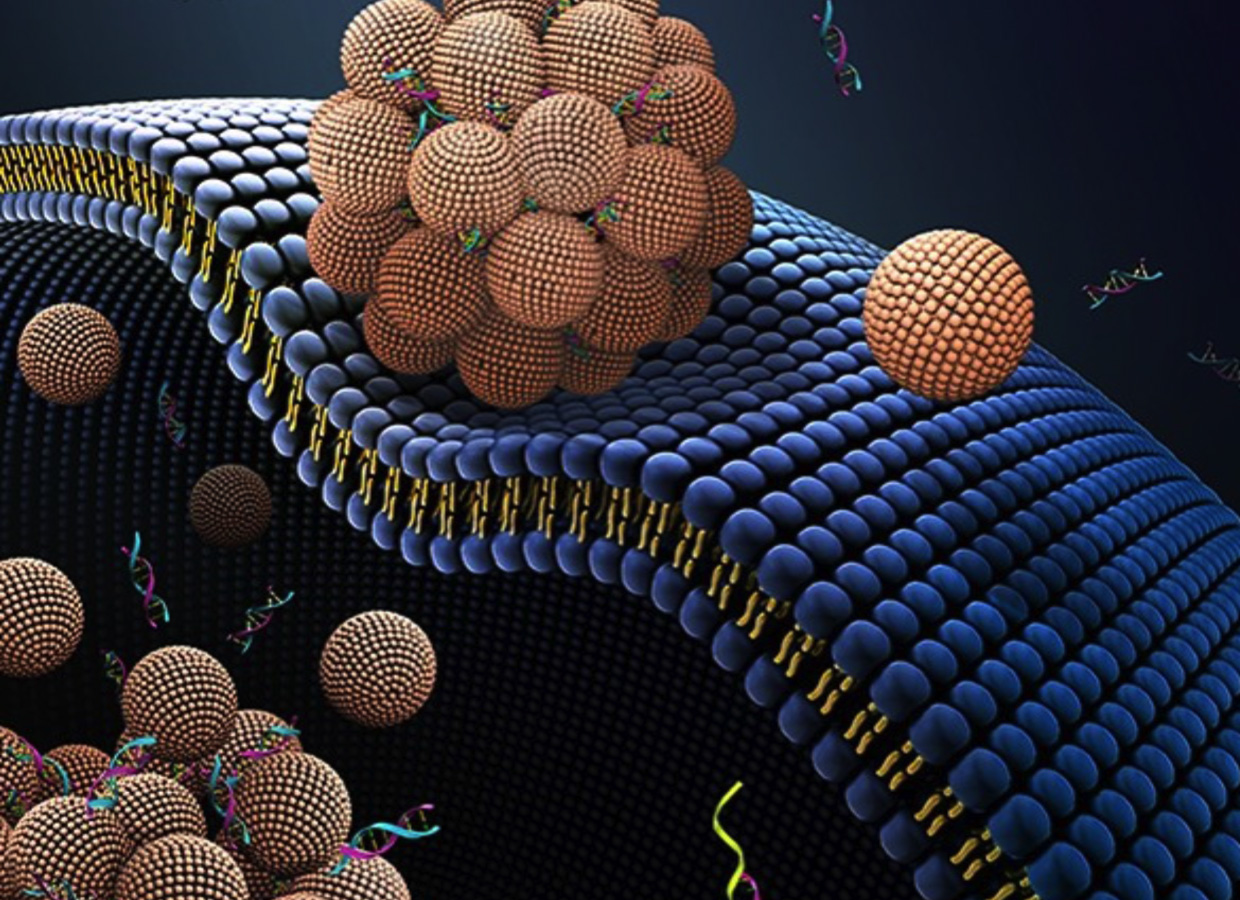
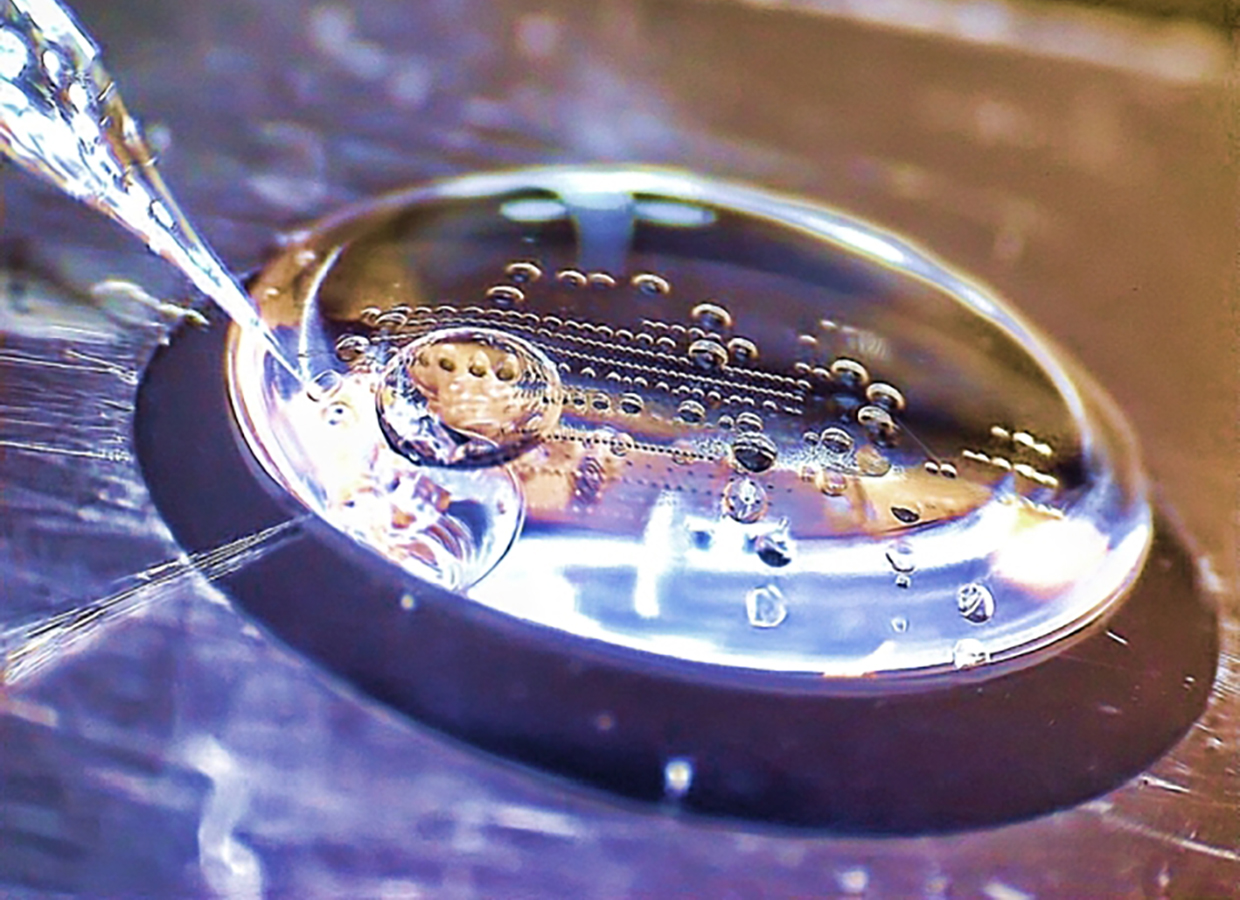
Des protons nus et autres ions légers à partir de l’eau…

Le contrôle à une échelle nanométrique d’une réaction élémentaire, la dissociation ionique de l’eau, a conduit à la réalisation d’une source ponctuelle de protons et d’ions légers ouvrant des perspectives nouvelles en optique des nano faisceaux d’ions.
Depuis longtemps, il est connu que des ions positifs sont émis dans le vide à partir d’une pointe métallique recouverte d’une couche d’eau lorsque la pointe est portée à un potentiel positif par rapport à son environnement. Initialement identifiés comme (H2O)n+ (...)

Lire la suite

Vignette une

Plasmonic resonances in diffractive arrays of gold nanoantennas : near and far field effects

We examine the excitation of plasmonic resonances in arrays of periodically arranged gold nanoparticles placed in a uniform refractive index environment. Under a proper periodicity of the nanoparticle lattice, such nanoantenna arrays are known to exhibit narrow resonances with asymmetric Fano-type spectral line shape in transmission and reflection spectra having much better resonance quality compared to the single nanoparticle case. Using numerical simulations, we first identify two (...)

Lire la suite

Vignette une

Ordered Misorientations and Preferential Directions of Growth in Mesocrystalline Red Coral Sclerites

N. Floquet* and D. Vielzeuf Aix-Marseille University, CNRS, CINaM UMR7325, 13288, Marseille, France
Cryst. Growth Des. 2012, 12, 4805−4820
Mesocrystals are superstructures made of mutually oriented submicrometer or nanometer-size crystallites. Sclerites located inside the organic tissues of the red coral are complex-shaped 50−80 μm large structures made of concentric layers of submicrometer crystallites of Mg-calcite. In a previous article (Am. Mineral. 2011, 96, 1228), we showed that (...)

Lire la suite

Vignette une

Magnetic anisotropy and surface reaction in Mn5Ge3/Ge heterostructures

As device miniaturization reaches technological limits, adding spin degree of freedom to the electron into conventional electronics appears as a promising solution and magnetic structures based on Ge are particularly believed to lead to a new generation of devices. In this work, published in Physical Review B, we have studied the reorientation of the magnetization in Mn5Ge3 thin films from in plane to out of plane as a function of the film thickness. We have shown that this transition (...)

Lire la suite

Vignette une

Nanopores : A Novel Self-Ordered Sub-10 nm Nanopore Template for Nanotechnology

Adv. Mater 24 (2012) 5094 Eric Moyen, Lionel Santinacci, Laurence Masson, Wulf Wulfhekel and Margrit Hanbücken
A wafer scale self-ordered array of high aspect ratio alumina nanopores with low porosity is obtained by anodization of aluminum. On page 5094, Margrit Hanbücken, Eric Moyen, and co-workers show how the understanding of alumina pore nucleation enables the pore diameter control down to less than 10 nm. Such a material can be used as a template to fabricate sub-10 nm zero- and (...)

Lire la suite


Actualités

Vignette actu

Kheya Sengupta, chercheuse CNRS au CINaM, s’est vue décerner un financement du Conseil Européen de la Recherche (ERC) pour son projet SYNINTER

Le projet « SYNINTER » (Smart interrogation of the immune synapse by nano-patterned and soft 3D substrates), mené par Kheya Sengupta, vient d’être financé par le Conseil Européen de la Recherche, dans la catégorie « Starting Grants ». Ce projet cherche à comprendre la physique de l’adhésion cellulaire et plus spécifiquement de la synapse immunitaire.
The project “SYNINTER” (Smart interrogation of the immune synapse by nano-patterned and soft 3D substrates), directed by Kheya Sengupta, was recently awarded (...)

Lire la suite


À noter

Séminaire CINaM

Prof Roy L. Johnston, Jeudi 20 juin 2013 à 14H00 CINaM - Salle Raymond Kern, Nanoalloys : Two (...)